Going Dark Is the New Deep Work: What Your Offline Hours Are Telling You
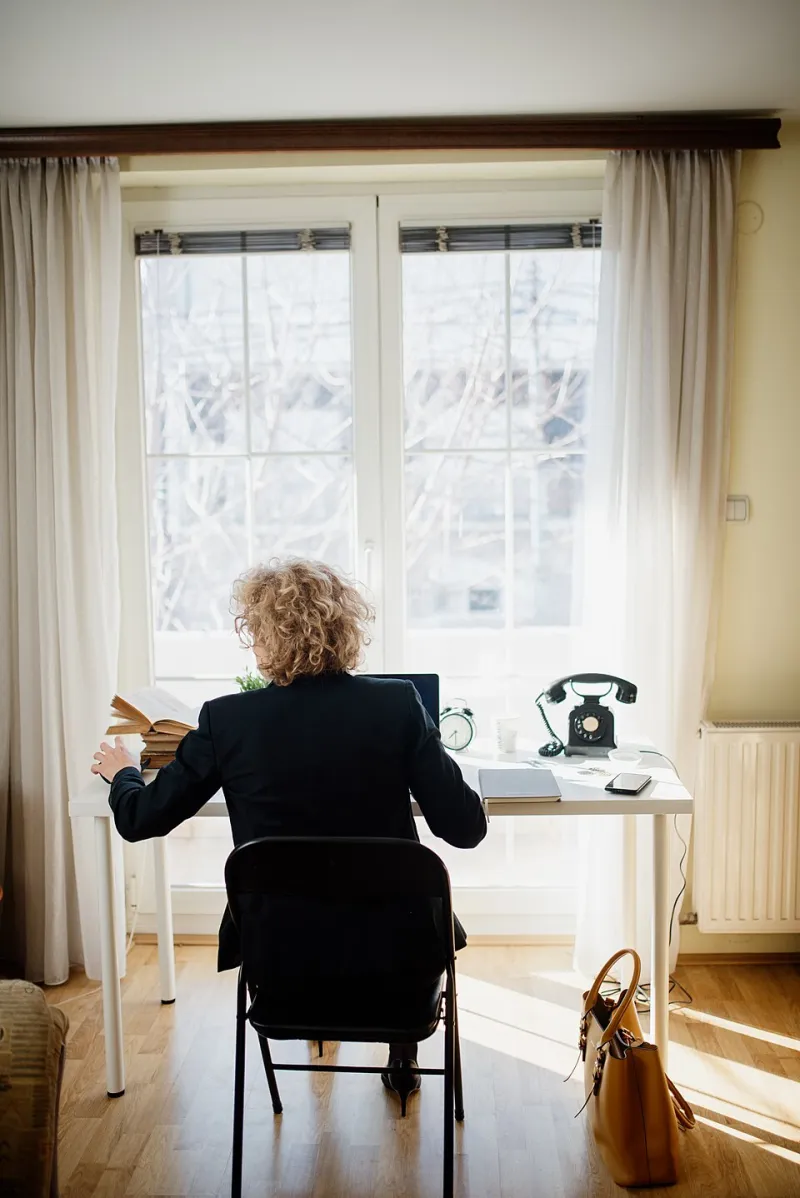
Photo: Shixart1985, CC BY 2.0, via Wikimedia Commons
There's a weird thing that happens when you finally close Slack, silence your phone, and sit down to actually work. You get stuff done. Real stuff. Not the performative kind — not the quick replies and the thumbs-up reactions and the "looping you in" emails — but the actual, meaningful output that moves a project forward.
Most of us have felt this. And yet we keep structuring our days like constant connectivity is the goal.
It's not. And the data backs that up.
The Ping Economy Is Costing You Your Best Hours
Let's be honest about what a notification actually is: it's an interruption that someone else scheduled on your behalf. Every buzz, banner, and badge is a small tax on your attention — and unlike most taxes, this one compounds by the minute.
Research out of UC Irvine has shown that it takes an average of 23 minutes to fully regain focus after an interruption. So if you're getting pinged every 10 to 15 minutes throughout the day — which is pretty standard in a busy Slack workspace — you're essentially never reaching full concentration. You're skimming the surface of your own cognitive capacity, all day long.
And here's the thing: most of those notifications don't require an immediate response. They just feel like they do.
Async Teams Are Outshipping Real-Time Teams
This is where it gets interesting. Companies that have deliberately shifted to async-first communication — meaning they default to written updates, recorded walkthroughs, and batched message-checking rather than always-on chat — consistently report higher output and fewer bottlenecks.
GitLab, one of the most visible examples of a fully remote, async-first org, has long documented that their model reduces the pressure to be "always available" while actually increasing the quality of decisions. When people have time to think before responding, they respond better. When they're not interrupted every few minutes, they build more.
Smaller teams are seeing the same effect. Founders who've moved from real-time Slack cultures to async tools — think Loom for updates, Notion for decisions, Linear for project tracking — often describe it as getting a few extra hours back each day. Not because they're working less, but because they're working in longer, unbroken blocks.
That's the offline hour in action. It's not that you're disconnected. It's that you've chosen when to reconnect.
Not All Notifications Are Created Equal
Here's a framework worth actually using. Before your next audit of your notification settings, sort every alert source into one of three buckets:
Urgent and time-sensitive. These are the notifications that, if missed for two hours, would cause a real problem. A production outage alert. A client in crisis. A deadline that just moved up. This bucket should be small — genuinely small. If you have 40 apps in this category, you've miscategorized most of them.
Important but not immediate. This is where most work communication actually lives. A teammate's question, a comment on a doc, a status update in your project tool. These matter. They just don't need to be answered in the next four minutes. Batch-checking these two or three times a day is completely reasonable — and most people who try it discover that nothing actually broke.
Habit-driven noise. This is the biggest bucket, and the one nobody wants to admit to. These are the notifications you check not because they matter, but because checking them has become a reflex. The LinkedIn notification. The app telling you someone liked your comment. The email newsletter you subscribed to three years ago. These are attention calories with no nutritional value.
Auditing your notifications is really just asking yourself: which of these buckets does this belong in? And then being honest about the answer.
How to Run Your Own Notification Audit
You don't need a consultant or a productivity coach for this. You need about 30 minutes and a willingness to be a little ruthless.
Start with your phone's screen time or focus data. Both iOS and Android give you a breakdown of how many notifications you're receiving per app, per day. Pull that number up. If you're getting more than 100 notifications a day across your apps, you're almost certainly in noise territory for at least 80 of them.
Do a one-week async experiment. Pick your highest-volume communication channel — probably Slack or email — and commit to checking it only at set windows. Try three times a day: morning, midday, late afternoon. Keep a note on what you missed that actually required a faster response. Most people find the answer is: almost nothing.
Use your calendar as a notification filter. If something genuinely can't wait, it can go on the calendar. If it's not worth a calendar event, it probably doesn't need an immediate ping either. This reframe helps teams calibrate urgency much more accurately than the "send a Slack message and expect an instant reply" default.
Kill the badge counts. App badges — those little red numbers on your icons — are one of the most psychologically effective attention traps ever designed. They create a sense of incompleteness that your brain wants to resolve. Turning them off for anything except your urgent bucket is one of the highest-ROI moves you can make in five minutes.
Your Offline Hours Are Actually Online Hours
Here's the reframe that makes this all click: the time you spend "offline" from your notifications isn't time away from work. It's time fully inside it. You're not absent — you're just not available for other people's urgency on demand.
The teams and individuals who've figured this out tend to describe a similar shift. Work starts to feel less reactive and more intentional. Projects move faster because decisions get made with more context rather than less. And the notifications that do come through — the ones you actually check during your batched windows — feel meaningful instead of overwhelming.
That's what saturation looks like when it's working in your favor: not more inputs flooding in at all times, but the right inputs, at the right time, with enough space to actually process them.
Your most productive hour probably isn't the one where you answered the most messages. It's the one where nobody could reach you — and you built something worth shipping.